Plasma?
The phenomenon of molecules being separated from each other by receiving energy from a molecular bond is called ‘dissociation’, and the electrons, positive ions, and radicals generated by the dissociation phenomenon are all called plasma.
-

Plasma Definition
-
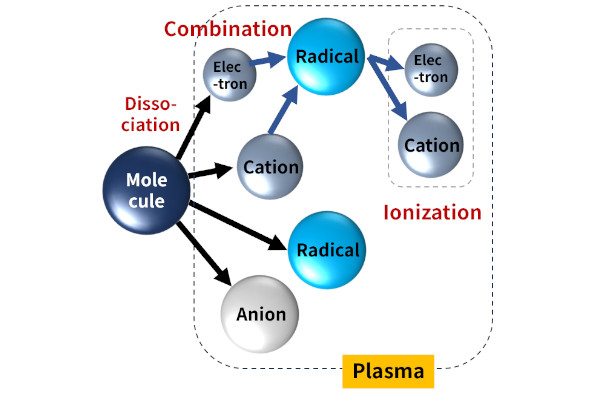
Plasma Range
Microwave Plasma
Microwave plasma is a technology that uses electromagnetic waves to ionize gas. As an electrodeless discharge method where electrodes do not come into direct contact with the gas, it is an innovative technology capable of generating significantly cleaner and higher-density plasma than conventional methods.
High-Density Plasma Generation
-
It maintains an extremely high electron temperature ($8–20$ eV) and electron density(1012~1015), even across a wide range of pressures, resulting in exceptionally fast processing speeds.
Electrodeless Method
-
Since there is no electrode contamination or wear, ultra-high purity (UHP) processes are possible, and maintenance costs are significantly reduced.
Wide Operational Range
-
Plasma can be generated in a variety of environments, ranging from vacuum states to atmospheric pressure.
Gas Versatility
-
It allows for a wide selection of gases, including Air, H2, CO2, Ar, N2. Even when using highly reactive gases (such as oxygen or fluorine), there is no concern regarding electrode corrosion.
-

Microwave Plasma
-

Microwave Plasma Concept
Applications
Microwave plasma is a versatile technology with broad industrial applications. Here is the professional English translation, organized by sector.
Water Treatment
-
A technology capable of neutralizing hazardous byproducts generated during complex chemical processes that are otherwise difficult to treat.
Advanced Material Synthesis
-
Graphene production, Carbon Nanotube (CNT) synthesis, Diamond-Like Carbon (DLC) deposition, etc.
Surface Treatment
-
Cleaning of metallic and polymer materials and hydrophilic modification (improving surface energy for better bonding/wetting).
Gasification and Reforming
-
asification of waste and biological byproducts, Hydrogen production and high-energy gas reforming of LNG.
Sterilization and Disinfection
-
Utilizing radicals for the sterilization of microorganisms and disinfection of food packaging/pouches.
Liquid Fertilizer Production
-
Production of nitrogen oxide fertilizers and green ammonia through advanced nitrogen fixation technology.
Abatement of Refractory Gases
-
Decomposing persistent industrial pollutants (such as PFCs and Ammonia) through targeted plasma chemical reactions.
-
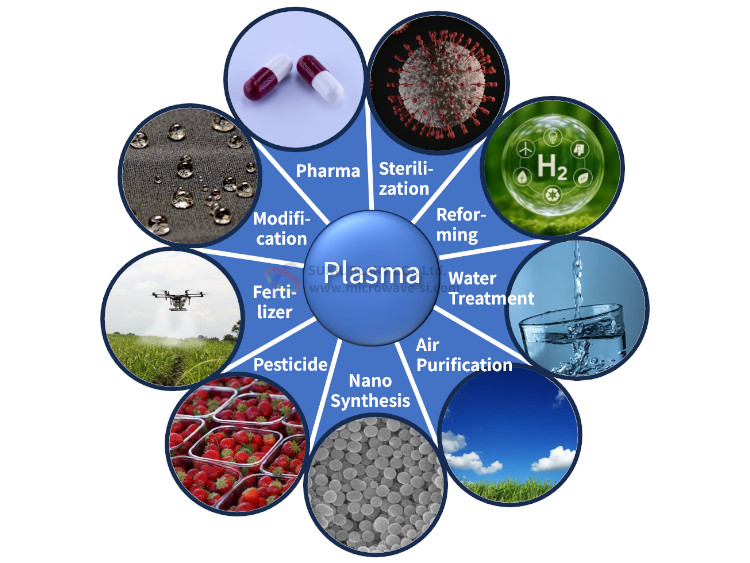
Microwave Plasma Applications
-

Microwave Plasma Dyeing Wastewater Treatment